Preparing for a watercolor painting

I’m planning a large painting—a full sheet of watercolor paper—of a figure. As eager as I am to start slopping paint around on such a large space, I know I”ll be happier if I first paint some smaller studies. I often make lots of studies before beginning a painting; with watercolor, it helps to know where you’re going.

Watercolor sketch of coat
Watercolor sketch of coat 8″ x 10″

The painting is based around an old coat of my mother’s. My grandmother made it in the 50s, and as a testament to my mother’s care and thoughtfulness with her things,  the coat is still like new. Getting the right red-orange color is difficult. It’s an unusual shade of red.

Watercolor figure sketch
Figure sketch in watercolor 10″ x 8″

I got my niece to pose for me in the garden and I sketched, took photos, and made color studies. She’s a lovely young woman and I wish she would be my model always, but sitting still for so long made her feet fall asleep. It’s hard work to be a model.

Watercolor painting of a young woman's face
Watercolor portrait study 7″ x 5″

This is much larger than it will be in the painting, but I couldn’t resist painting a close-up of her face.

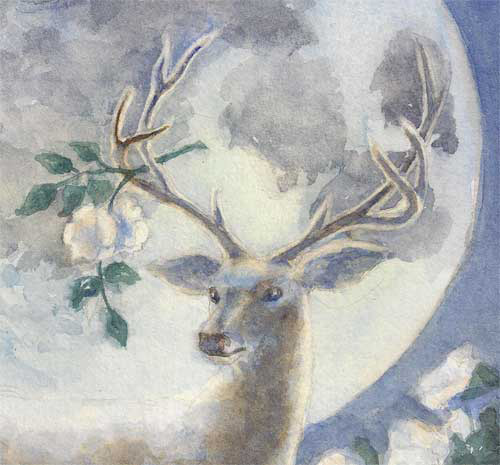
The supermoon brings the deer to the roses

White deer in roses
Hart in the roses

Watercolor on paper
© Margaret Sloan 2013

July’s supermoon kept me awake for the third time this year, and my wakeful night inspired this watercolor sketch for a painting of a hart in the roses. In North America, the full moon of July is known as the full buck moon, when deer have antlers (some say the antlers are still in velvet. Any readers out there know for sure?)

I’ve been a gardener for many years, and I don’t find deer as thrilling as an un-gardened person. But a hart  in the roses, edged silver by the supermoon is a magical image. The hart (especially the white hart) is a mystical being in many cultures. A white stag led Arthur and his knights on hopeful quests, brought Hungarians to their homeland, gave Frenchmen pain from unrequited love, and made  Native American brides beautiful on their wedding day. The white hart even became the Christ in some Christian countries. And it was the white stag the children hunted in the first Narnia Chronicle that led them back through the wardrobe into their own non-magical world.

I live in an urban area, where deer are few and far between. So if I saw one in the garden, I think I would have to follow it. Until that time, all I can do is follow it with my brush and paint. It will have to be enough.

WhiteHartcloseup

For more about the hart in mythology, you might try these sites:

Terri Windling’s Wonderful Blog, Myth and Moor
Protect the White Deer
The Sacred Hart Moot
The White Deer

The goddess and her cat

Note: For the first time ever, I’m offering paintings for sale online. These paintings, to be specific. You can find them on Etsy.

This series of paintings popped into my head one night as I sketched in pre-sleep drowsiness, having just finished Neil Gaiman’s American Gods.

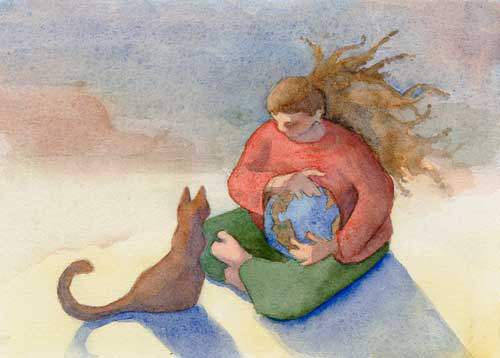
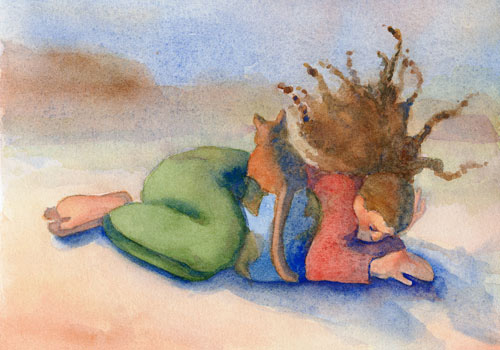
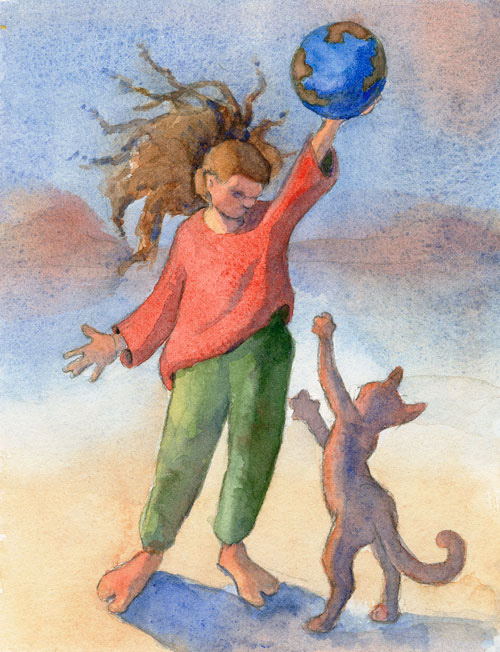
The liturgy at the congregation where we celebrate the High Holy days does not give G*d a gender, or rather, the gender is floating, sometimes male, sometimes female, sometimes nothing. So I have chosen to portray the earth’s protector as a feminine entity, a Goddess, if you will, in comfy clothes (she’s a goddess; she can wear sweat pants if she wants!), with a cat (you can make the cat a symbol of something if you want. But really, it’s just a cat. And isn’t being a cat enough?)

Earth Mother Protects

 Earth Mother #1: Protecting
7″x 5″
© Margaret Sloan 2013
Watercolor on paper
Earth Mother Sleeps Earth Mother #2: Dreaming
7″x 5″
© Margaret Sloan 2013
Watercolor on paper

Earth Mother Plays

Earth Mother #3: Playing
5″ x 6.5
© Margaret Sloan 2013
Watercolor on paper

My Etsy shop, in case you don’t like to click is: etsy.com/shop/MargaretSloanArt


Night terrors and books

I was a fairly brave child during daylight hours, but the sleeping little-girl me often ran through dream woods chased by half-seen threats and shadowy monsters.   (No, I was not an abused child, but I did have a propensity for watching The Twilight Zone and reading scary books.)

Girl running from monsters in the Woods

One night, while running from dream monsters, I chanced upon a boat floating in a dream river. I jumped into the boat and cast off from shore.  The boat floated across the river, leaving behind the snarling night creatures (who evidently didn’t swim).

Escaping by boat

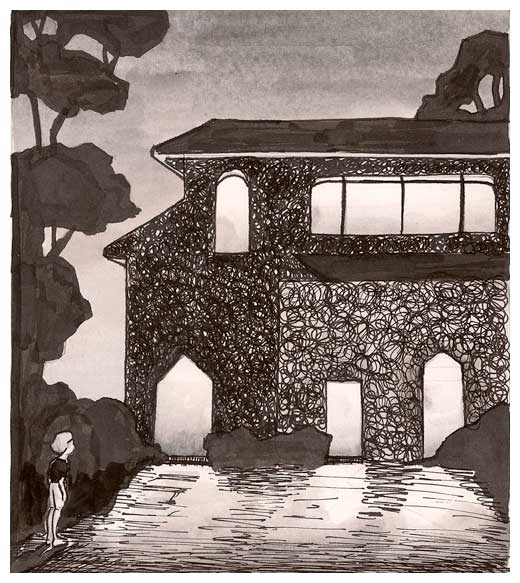
The little boat landed on the shore of an island. I followed a muddy path and found a house with its windows glowing and door ajar. In that weird way of dreams, I knew I was welcome. I crept in and found a house full of books.

Lighted house beckons in the dark

In the heart of the house was a comfy armchair in front of a fireplace made up with a perfect fire. A floor lamp cast a pool of light over the chair. And I knew I was home, and a happy home at that. I was in a place where no monsters could get me as I curled up in the chair and opened the nearest book.

Girl reading by fireplace

After that dream, I learned to control my own night journeys, often making them into movies by directing them. It’s amusing to see the frustration of a slobbering slagrothlockeling (made up dream monster name) when you make him do the 12th take because he wasn’t believable enough. I got some good performances out of my dream beasts; however, I almost always was victorious in our dream battles.

I still love books, and my dream house has become my real-life house (okay, not so nice as in my drawing). I still feel safest surrounded by stacks of  books, comforted by the smell of paper and ink, the whisperings of the printed word. And this is why it’s been so hard to weed my “library” for our upcoming move. But I’m doing it.

If you’ve got time (about 25 minutes) you can watch an episode (about a book worm!) of The Twilight Zone here, but I’m warning you, most frightening of all, there are commercials (and they’re not well placed either).

Oz

OzBooks

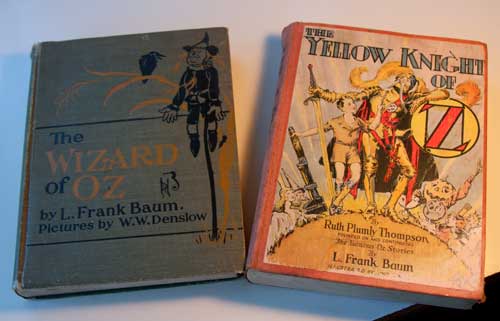
Okay, so the Wizard of Oz is a cliché classic. Everyone loves it, don’t they?

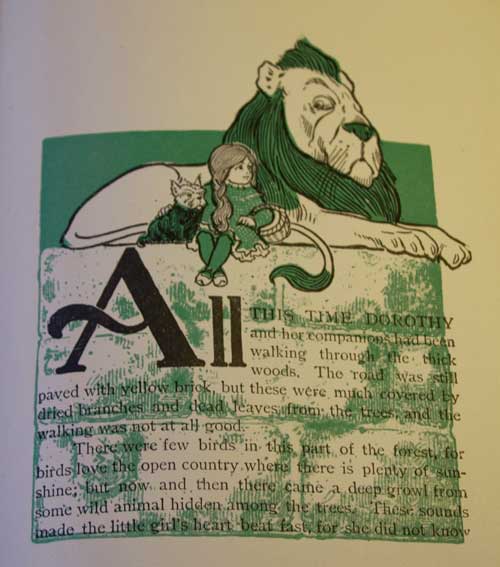
The childish me had mixed feelings about the Wizard of Oz. I liked the story, but this particular 1903 edition (the one on the left in the photo above), gave me a bit of the creeps. (Yes, it was probably from a library sale. Seriously, in the 60s you could buy wonderful old books by the grocery bag for 50 cents.) While today I recognize the brilliance of the W. W. Denslow illustrations, when I was 9 they  gave me a slight chill. Well, actually, they still make me slightly uneasy.

Oz_LionandDorothy

I think that the idea of “cute” was different at the beginning of the twentieth century. While Dorothy looks sweet in her thick, half-done braids (a hair-style I, with a fashionable 60s pixie-style foisted upon me by my overworked mother, could never aspire to), Toto looks a trifle dangerous. Maybe more dangerous than the lion.

Oz_Tinman

The tin man looks friendly enough in this plate. For a guy with an axe.
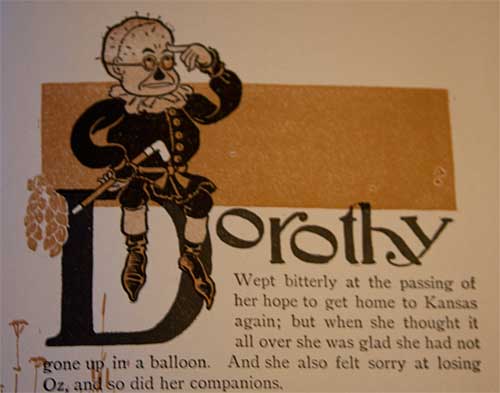
OZ_Scarecrow

The scarecrow’s head got all lumpy and pokey when the wizard filled his head with pins and needles. Childish takeaway? Brains are sharp and pointy, and maybe painful.
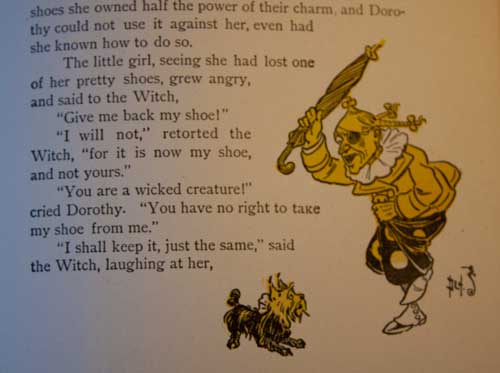
Oz_Witch

And the witch had braids! Three of them. And decidedly bad fashion sense; no wonder she wanted Dorothy’s shoes.

This is a beautifully printed book, and it’s amazing to think of quality that lasted 100 years through repeated readings.  For some reason I didn’t mark up this book, probably because I was afraid of the illustrations.

The other book on the right, (in the top photo) I did mark up. I colored away in it. Boo on me. But it’s not nearly as commanding as the 1903 book. Maybe I liked it better, or got it when I was younger. It was a gift from a family friend, a woman who was moving and cleaning out her possessions. I think it had been her book, and possibly her mother’s before that.

Caveat: This may look like a valuable book, but it’s not. I got all excited when I Googled it, and saw the price on a first edition. But this is not a first edition. Not even a second edition. Not even a first printing of a third edition. It’s not worth much more than a dinner at a fancy restaurant (without the wine). My childhood is worth ever so much more than that. So I’m keeping this beautiful, slightly creepy book, and the other one too.

Bondage I’ll keep

The good news is, we finally found a place to live. The bad? We’re purging ourselves of possessions so we’ll fit, light as feathered birds, into our new, much smaller digs.

To help with the agony of jettisoning, I tell myself to remember that possessions are bondage, but I’m mostly tossing books (because aside from art supplies, that’s mostly what I have). And it’s hard to get rid of books. Some I can not bring myself to pitch into the rough ocean of the library sale.

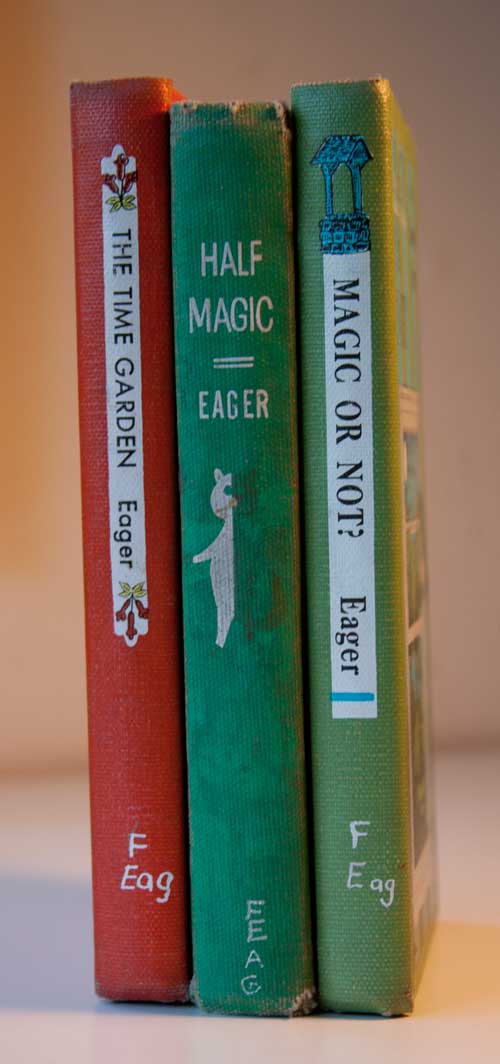
Edward Eager was my favorite author when I was a child, and I still love these silly books. You can buy them yet today, but not with the magical hardcovers I read (and coveted) as a child.

EagerBooks

These aren’t valuable books. They’re library discards, complete with the checkout card in the little pocket in the front cover. But, dated from the 1950s, they have the original illustrations by N.M. Bodecker , worn covers from years of childish love, and dog-eared pages to mark where someone was called to dinner or to do their homework.

HalfMagic

Half Magic was one of my favorites, full of silly maths and puns. The children in the book find a token that grants them exactly half their wish, so they always have to wish for twice as much. They eventually figure this out, but their math is often bad, and magic is fickle; wishes don’t always turn out exactly as they had been envisioned.

My most favorite Eager book was Magic by the Lake, full of watery goofiness, mermaids, pirates, and talking turtles. But that particular library discard has been lost into the mists of time, lent to nieces and never returned. Maybe someday it will heed my wishing and return to my bookshelves.

Caveat: These books were written in the 1950s, and so contain images and language that some might find offensive today. If you’re easily offended or have a particular politically-correct bone to pick, please don’t read these books, or if you do, please don’t complain to me about it, as I’ve made my peace with it and still love Edward Eager’s books.

Rapid Painting

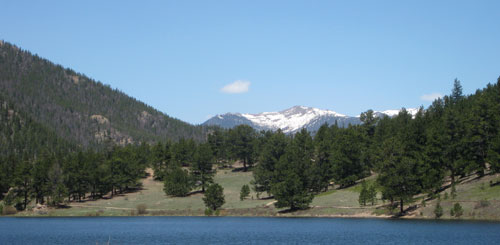
Lilly Lake near Estes Park, Colorado

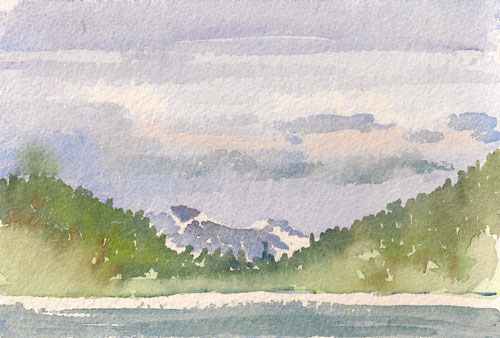
On a recent trip to Colorado, I painted at Lily Lake near Estes Park.

I’ve been trying to loosen up my watercolor landscapes; normally I make a tight pencil drawing on the paper before I start applying water and pigment. But I’m not liking the results. The image is too tight,  much like a cartoon.

Watercolor landscape painter Jonathan Pitts advises starting out with a 5-minute sketch before launching into a longer painting. In 5 minutes there’s only so much you can do. You have to rely on simple shapes, colors, and brush strokes.

At Lily Lake, I couldn’t quite restrict myself to 5 minutes. I gave myself a 15 minute time limit for an initial sketch on a 3.5″ x 5″ piece of watercolor paper, set the timer, and painted.

LilyLake_15MinutesLily Lake
15 minute study
Watercolor 

Next I worked for a couple of hours on a larger piece of paper. It was late afternoon, and the light and sky was changing every few minutes.

LilyLake_2hours

Lily Lake
2 hour study
Watercolor

I like the quick study much better. Making quick decisions forces me to work rapidly in bold patterns and simple color. Such “thin-slicing” is not my normal state of affairs; I usually mull things over until they are thoroughly mushed and muddy. I’m searching for clarity in many things. Funny that it should sometime come as a result of flash decisions.

Looking for a new nest

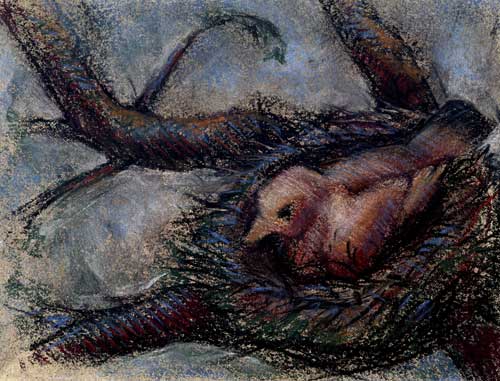
Bird

Bird on nest
© 2010 Margaret Sloan
Pastel on paper

It has been many a long month since I’ve blogged. Life has been busy! And for the last two weeks, we’ve been fluttering about like two meadowlarks before a bulldozer as our rented home has been put up for sale. In the Cities by the Bay—a metropolitan area crammed with overpaid hi-tech workers and floating on rivers of investor cash—we probably don’t stand a chance of building or buying, although that won’t stop us from trying.  But our best hope is to find a rental we can afford (dear reader, if you know of something, please let me know…).

Home is a tenuous place. Lots of people in the world don’t have homes. The economy sneezes and lives fall apart. Tornadoes rip off roofs, and earthquakes crumble walls. Water drowns foundations, and  fire sends all to ash. War…well, thank God we don’t have to worry about that in our country right now.

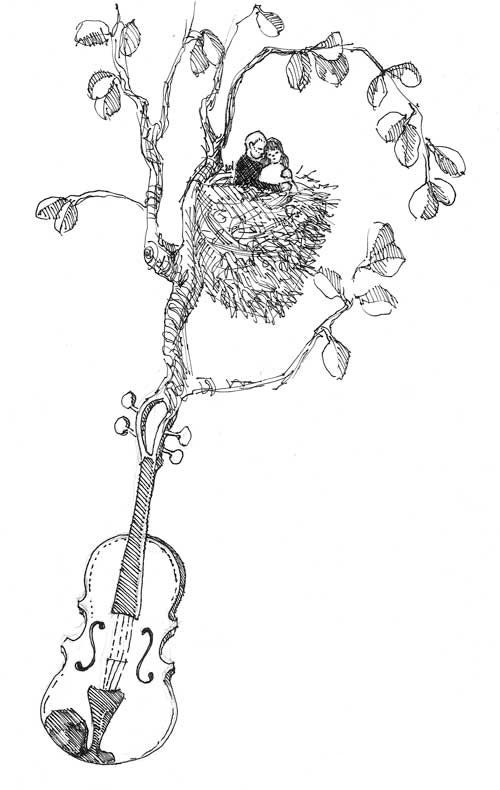
And when you come down to it, home isn’t just a structure (although structures shelter you from rain or wind). It’s in your heart, with those you love. And the fiddler is my home, his arms my shelter, and his music-filled heart the center of our family nest. (Yeah, yeah. Sappy, I know. But scary times call for large amounts of sap.)

Fiddle Nest

Grass moon

Grass Moon
Grass Moon

We’re just coming off the April full moon (last night, gleaming through the slats in the blinds, she woke me; though waning gibbous, she still left me breathless) . Her names are hopeful: the Pink Moon; the Full Sprouting-Grass Moon; the Egg Moon; the Full Fish Moon.

Here in the Bay Area I think she’s best called the Grass Moon. It’s a name that celebrates the luxurious growth of plants reveling in moisture at the end of our short damp winter.

This is a painting from Russian Ridge (right now one of my favorite places in the Bay). On the day I painted this, the marine layer (aka fog) covered the mountains, hugging the ridge in the drippy embrace of the not-too-distant ocean. The grass raved viridian, turquoise, and shining wet jade green around this little outcropping of rocks.

In just a few weeks the grass will yellow and turn white-gold in the California sun. Even now the poverty grass is silvering, turning the color of a new moon.