Year of the portrait

Unfinished self-portrait

Each fourth-year student at the atelier chooses a thesis that they work on in and out of class. My area of focus is portraits. Because one of the things I’d like to be doing is drawing portraits. Ppeople fascinate and  confound me, and compel me to try to understand them. And drawing them helps me do that.

In college a million years ago I studied theatre, which is really the study of humanity, magnified by over-the-top drama, stage makeup, and masks. Theatre, and the people attracted it, can be a risky business. It can be quite painful. So one year I gave up theatre to study horticulture.

I did that because—aside from being obsessed with plants—I found that studying the sciences of botany and soils had a certain kind of safe roundness in which I could wrap myself. There were no lumpy inconsistencies and thorny disputes of the kind that make humanity a hard garment to wear. And so for years I immersed myself in the study of horticulture.

During that time I had a dog.  She was a great dog, but she didn’t really know she was a dog. She’d really never been around many dogs. Then we moved into a house where there were two other dogs. Much to her surprise and delight, my dog discovered her canine heritage. And she loved being a dog. So much that for a few months, she would barely speak to me. She just hung out with her two biggest, bestest doggie buddies.

Like that long ago dog of mine, about a decade ago I suddenly found myself  in a place full of people. It was hard going at first. But slowly I’ve discovered that I am, indeed, a human, and that other humans are fascinating. Maybe I like being human again.

And so  I’ve come back around to studying humans. Don’t get me wrong. I still love the green world, and seek refuge among forests, meadows, and gardens when the human world gets to be too much (and it does, believe me, it does). But I’m learning to deal with the humanity of the world.

And I find that drawing helps me figure people out. That’s a plus. And when I’m drawing a portrait, I can sometimes connect with the person I’m drawing in a very deep, intuitive way. I really like that.

And so, I’ll be drawing a lot of portraits, and studying the where’s, why’s, and who-to-fores of portrait drawing, along with the study of all my other fractured interests. I’ll share what I learn here on this blog.

Steampunk music

DancingLadiesAt the Abney Park part of the Seattle SteamCon concert, I had an odd, disconnected moment when three beautifully proper Edwardian ladies threw off their jackets and started boogying across the floor.

My niece loves Abney Park.  The band is edging towards something I’d like to listen to. But I’m put off by the karaoke-style drum track—guess I’m just old fashioned and want a drummer that I can swoon over. Captain Robert whapping on a djembe is not the same as a guy on a kit.

However, their show is  wonderful. I love watching them. The costumes are wonderful, the stage business interesting, and sometimes they have a belly dancer! I’m just not so into listening to them. But that could change. I’ll keep trying.

I’ve been trying hard to like Steampunk music. Honestly, I have. I’ve listened to most of the jukebox at Sepiachord.com. I’ve sampled some of the Steampunk bands at LastFM.com. (ok, Circus Contraption’s cut Come to the Circus comes close to being interesting, and  Clare Fader’s throwback Caberet Noir is compelling), but I’m still not sold on the style.

But I’ll keep listening. Isn’t anyone doing Steampunk tinged trad Irish?

The practice of music and art

Pastel pencil on colored paper

This is a small drawing I made of my friend Cyndy. It’s from a photo taken as she was sitting around a campfire, playing tunes with a group of musicians.

I know Cyndy’s present teacher. He’s told me that she’s the kind of student a teacher loves to have. She really thinks about the music she plays, and she makes him think about it too. And she practices!

She’s passionate about her fiddle in the way most of us are passionate about a new romantic partner. But, come to think about it, I know a lot of musicians who are married to their instrument, and playing music is simply part of their everyday experience. I also know artists who feel the same way about their art. (I’m torn between the two. Do I play tunes, or do I draw? Tough question, that.)

Sometimes playing music or making art becomes a stale thing, or a stressful thing, fraught with needs and cravings that block the joy of our passions. But if we really think about what we’re doing, and lose ourselves in the process, suddenly the work becomes play, and we amaze ourselves at our success.

Shannon Heaton, one of my favorite Irish flute players, has a terrific blog at Whistle and Drum called The Inner Game of Irish Music about practicing the music. She’s talking about Irish music, but she could be talking about drawing, painting, old time music, classical music, dancing, or even just plain-old, everyday work.

Llamas in New York

Llamas

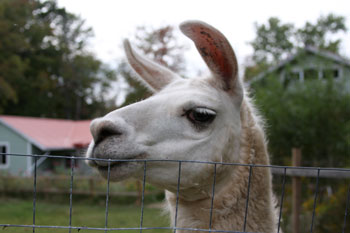
To be honest, one of the only reasons I chose to stay at Clove Cottages (near High Falls in upstate New York) was because of the llamas. They have two, Sugar and Cocoa. If they’re curious that day, and you look interesting, they’ll come up to the fence and whiffle softly over your face. They don’t much like petting.

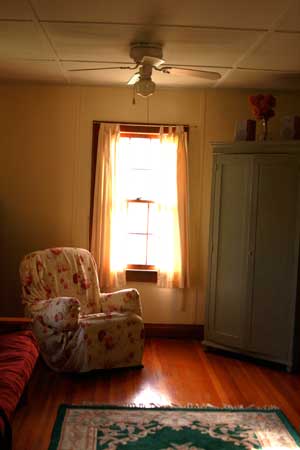
The cottages are very sweet, although a little funky. But what can you expect from buildings that are nearly 80 years old? The floors slope, they smell of old wood, and they are thoroughly charming.

Clovecottage

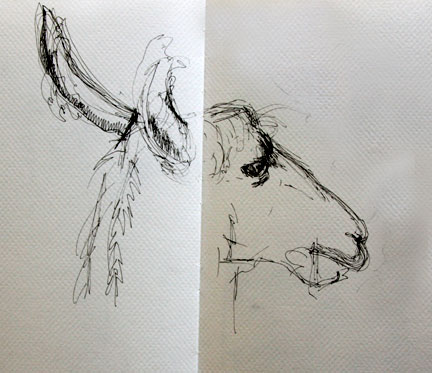
The llamas have been great fun to draw.

Llamadrawing

Kiss a bee in the morning

A few weekends ago I visited some friends who live way out in the country in the Sierra. They’ve got a beautiful place that’s fully off the grid, and far from any  highway.

After an evening of music (Richard plays the flute, Lynn plays the banjo) we dragged a big foam pad onto the lawn and Lynn and I slept out under the sky.

SleepingOutside

At first I was sure I wouldn’t sleep. It was too thrilling. I could feel the earth living under me, and all around me. The moon was whitely bright (I had to cover my eyes with the quilt), and down the valley two owls hooted at each other. Tree frogs sang. They startled me. I’ve lived in Sili Valley too long and forgotten what tree frogs sound like.

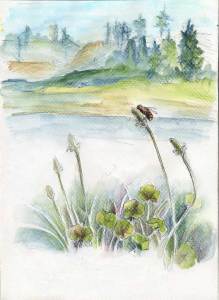
At dawn the sound of a bee buzzing in my ear woke me. She was scarcely 6 inches from my head, clambering over the blossom of a plantain. From ground level I looked across the lawn and saw hundreds of bees—honey, bumble, and black—all working like little flying field hands. Waking on the lawn was easy and natural.

BeeonFlower

It was hard to come back to Bay Area, where the only creatures I hear at night are police sirens and the neighbor blowing his nose (and sometimes snoring in big honking grunts). I can’t sleep outside in the city; the neighbors would be able to watch me (that’s creepy), and the rats in the backyard might chew on my nose. And sometimes scary people frequent our neighborhood.

But many nights as I wrestle with wakefulness I wish fervently that I could sleep outside. Ah, I think, if I could just take a blanket out under the apple trees and stretch out on one of the lawn chairs. If I could feel the connection to the earth that comes from being outside and in the night time, then perhaps I could sleep. And if I didn’t, would it matter?

I don’t have a sleeping porch or an isolated birch tree to sleep under, so I have to make do with sleeping next to the window and feeling the air as it tumbles into the room. If the neighbors turn out their lights (which shine in my window), I can open the blinds and watch the tops of the trees in the back yard. That will often help me sleep.

But in the morning, instead of bees buzzing gently next to me,  I waken to NPR blaring on the radio. The news is the only thing that will launch me—still half sleeping, but ranting and fuming—from bed. While I eat breakfast,  I hear  crows hollering back and forth and squirrels thudding across the roof. In spring, occasionally a mocking bird will sing. But it’s not enough to cross the divide of modern life and put me at peace.

How do you live in an land of concrete and apartments and still keep in touch with the earth?

A fiddle is only as good as it plays

VuillaumeBack

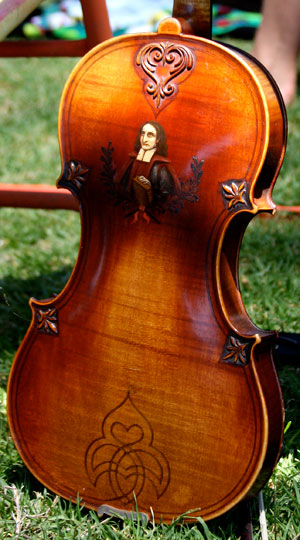
This  fiddle I saw at the Good Old Fashioned Bluegrass Festival. The lady bought it in the 1970s. She thought it was a Vuillaume. Maybe.

VuillaumeBackCl

The name Vuillaume could mean anything. It’s like finding a fiddle in your grandmother’s attic, peering through the f-hole and seeing a  Stradivarius label. Probably not a real Strad. Lots of people have made lots of money selling instruments with phony labels. And musicians tend to give their instruments distinguished pedigrees.

VuillaumeScroll

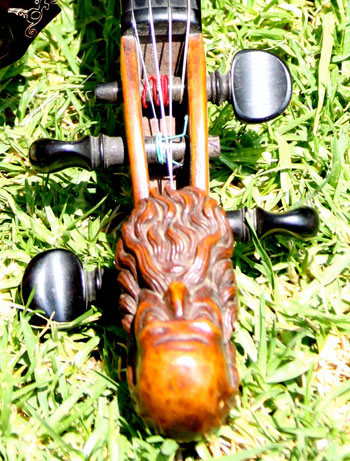
But whatever this fiddle’s ancestry, it is a lovely piece of work, with a beautifully carved scroll, and cunning carved corners on the back, and Celtic-looking purfling. The scroll does place it sometime during the 19th or early 20th century—a time when ornamentation was popular on all things, and ornamented scrolls decked out many fiddles.

I’m not a violin connoisseur, so I didn’t know enough then to look closely at the painting on the back to see if it is inlay, painting, or both.

The most important things about a fiddle are how it feels when you play it, and how it sounds. An instrument can have the beauty of Grace Kelly, but if it shrieks like a toothless angry old witch, then it’s of no use.

The owner of this fiddle treated it with the casual attention you’d give a favored pet. It sat next to her as she sat listening to the music. She carried it around, cradled in her arms. She loved it. She said it had a great sound.

That’s all that’s important.

Good old fashioned sketchbooking

Guitar playerWell, whattaya know! The Great Bluegrass Festival Drawing Expedition was a blast. Despite my fears at venturing into public drawing, I sketched unscathed at the Good Old Fashioned Bluegrass Festival. Musicians didn’t take offense at my sketching: bass players didn’t mow me down with their gigantic instruments; fiddlers didn’t skewer me on their bows, nor did banjo players strangle me with their twangy metal strings. And the people who looked at me (yes, they did. They actually looked at me with my little journal and bag of pencils) while I drew, why, they were delighted! One woman saw me drawing, grinned widely and said, “what fun is that!”

And darn it, it is fun. Normally I dislike listening to music while I work. I find it distracting—one of the uncomfortable things about being a musician is that there is no background music. My musical brain always stands at attention for anything resembling music, and disallows any action by the other thinking parts of my brain. I am not a good multi-tasker when music is playing.

The Barefoot Nellies singing harmony

But this was different. For one thing, I was prepared for music.  I knew there would be lots of it. Besides, I wanted to sketch musicians while they played.

One thing I learned. Bluegrass really sets your toes tapping and makes your drawing arm swing.

It was really hard to sketch people as they played. Those musicians are moving all the time, and each drawing was an exercise in fast gesture poses—good practice for me. You can see that the drawings weren’t entirely successful, especially around the hands. And even less successful around the instruments.

One of the Winton boys playing dobro and a small sketch of the dad playing guitar.

I point out the unsuccessful parts because drawing at this festival really made me see the areas in which I have smaller knowledge, the parts of the world that I need to really look at and understand. That means concentrated study.

To draw a form rapidly, and draw it well, I think you need study it. It needs to be in your head already. You have to study forms so hard that you can trot out a hand, a foot, a face, a fiddle, and draw it perfectly from memory. Once you’ve internalized it, then I think you can really accomplish something.

Again, it’s the analogy of musical scales. You’ve got to get those major and minor keys down so you can shift between them at any turn of the tune. Then you can really start to have fun when you play with other people.

Fear and sketching in Tres Pinos

RichardThis sketch is of my friend Richard. Richard is a versatile musician. He plays Irish music, old time music, jazz. I’ve known him over a decade now, and he has taught me numerous tunes.  I drew  this picture in a Kunst & Papier watercolor journal I won from  a contest held by one of my favorite bloggers, Roz Stendahl. The paper’s not great for watercolor; it doesn’t hold a lot of  watercolor pigment and it buckles. But it’s a nice feeling book to work in, and the paper will take very light washes of color. I like the way the Tombow goes down, and I like the way pencil slides across the paper. The book is sturdy, and fun to carry around.

I love drawing musicians while they play music. Trouble is, I’m shy about sketching in front of people I don’t know. Or even those I do know, unless I trust them—as I do Richard. I’m still working on my chops in the portrait department, and I still feel inadequate. Criticism isn’t helpful.

I am trying to get over this. I’m trying to get over the feeling that people who look at me while I’m painting are grading me or rejecting me. I think it goes back to an old boyfriend who once said, “You’re not going to be one of those artists who draws in public all the time, are you? People will look at you!”

And people do look. They crane their necks to look at you, stand over you and breath on you, make comments. It’s disconcerting. But of course they look at you.  David Hardy, at the Atelier, tells me that people “are fascinated and consider you special. You have added to the excitement in their life.”  What?! Little old me?

I know that other artists aren’t shy. Roz Stendahl goes to places like the state fair specifically to sketch. She writes about these jaunts as if they were an expedition, packing what she’ll need as if she were going to discover and sketch the headwaters of the Nile. I’ve decided to emulate her.

This weekend we’re going to the Good Old Fashioned  Bluegrass Festival in Tres Pinos.I’ve never been, and I don’t play bluegrass music, although I’ve listened to a fair amount of it. My husband will be appearing in his band, Harmon’s Peak. I’m going on a mission: to draw people. I’m going to have to force myself to do it, as the thought of sketching in public like that makes me weak in the knees. What a wuss I am!

I’m planning it like it’s an expedition. I’ve got to choose what medium to work in, and which sketch book I’ll take. Then I have to remember my glasses. And to take deep breaths. And to have fun.

The question of perfection

Fluteplayer <br />  <br>© 2009 Margaret Sloan<br /> <i>Graphite </i>
Flute player © 2009 Margaret Sloan

I’ve been working on this painting for something like a month now, doing color roughs and composition studies. Of course, I don’t work on it every day (the day job, much as I love it, cuts considerably into time for painting and drawing), so I have some (lame) excuses for my slow pace.

This is the drawing for the for the final painting.  It’s given me quite a lot of trouble, because I have been picky about it. Teacher Steve has said, “you’re splitting hairs. I know that’s your working method, but you need to get on with painting!” I know he’s got a point: the piece can get too precious. But I know also that I need to get the base drawing right in order to convey what I have to say in this painting.

First of all, I needed to get the tilt of the flute player’s head as she bends forward to meet her flute. The head is down, the chin tilted to the left, and the body curls around the instrument. (This  flute posture is actually a position I’m trying to modify in my Alexander Technique classes, as playing the flute tends to give me terrible stiff necks and headaches.)

I struggled until I was ready to bite the pencil; the drawing kept looking like a profile, until Steve pointed out that when you look down on a persons face, there are certain cues that tell us the tilt of the head. The brow line curves down  and covers the top of the eye. You can see more of the inside of the bottom eye lid. And you can see more of the top of the head. Yeah, I know that already, but sometimes we’re blinded to the simplest mistakes while drawing. I made those changes, and—shazaam!—the tilt was there.

I also want to convey her age (young) which means her features are rounded, slightly blunt, and soft (I’ll use color also as a symbol of her age, when I do finally start painting). I had to measure the drawing carefully, because her chin and nose kept growing in the drawing, giving her that kind of solid jaw-bone look of grown ups.

But the most important thing I want to convey is the way she’s  listening hard to the tune in her head and reaching into her flute to pull out the music and send it into the world. That’s going to be the magical thing that makes this painting work.

This is to to be a larger size painting than I usually work in, on 12 x 16 Arches watercolor block—blocks being the easiest thing to schlepp back and forth to the Pacific Art League watercolor class, where I do most of my watercolor painting.